
Old jeans don't have to end their life as textile waste. Their cotton fibers can be recovered and turned into paper or paperboard for shopping bags, gift boxes, garment tags, and other retail packaging.
Recycled denim packaging uses fibers recovered from discarded denim clothing or manufacturing offcuts to create new packaging materials. These fibers are often blended with other paper fibers to form sheets that can be printed, folded, or shaped into packaging.
For luxury fashion brands, this creates an interesting connection between the product and its presentation. The denim used in clothing can find another purpose in the packaging that accompanies it.
But how does denim become paper, and which packaging formats can use it? Let's look at the process, applications, and material considerations.
How Is Recycled Denim Turned Into Packaging Paper?
Denim is typically made from cotton, a natural cellulose fiber that can also be used in papermaking. Rather than keeping the fabric intact, manufacturers separate and process its fibers to create a new material.
The process generally involves five stages.
1. Collecting and Sorting Denim Waste
The starting material may come from worn-out jeans, unsold denim garments, or leftover fabric from clothing production.
Collected textiles are sorted according to their fiber composition and suitability for recycling. This helps separate usable cotton-rich denim from materials containing large amounts of synthetic fibers or other unwanted components.
2. Removing Non-Textile Components
Before processing, metal buttons, zippers, labels, and other accessories are removed.
A pair of jeans may contain several different materials, so sorting and preparation help create a more consistent fiber supply for papermaking.
3. Breaking Down the Fabric
The prepared denim is cut or shredded, then mechanically processed to separate its fibers.
This produces loose fibers that can be prepared for papermaking. The process is different from recycling denim into new yarn, where the recovered fibers need to be suitable for spinning.
4. Creating the Paper Blend
Recovered denim fibers can be combined with recycled paper fibers or other cellulose materials to create paper pulp.
The pulp is formed into sheets and dried, creating paper or board with properties determined by the fiber mixture and manufacturing process.
The blend influences the finished paper's strength, texture, and appearance. Different formulations may be better suited to decorative wraps, garment tags, or packaging that needs more structural support.
5. Converting Paper Into Packaging
Once the paper is produced, it can be processed using familiar packaging methods.
Depending on its grade, the paper may be printed, embossed, cut, scored, folded, or glued to create a finished product. A decorative sheet could become a box wrap, while a stronger grade may be suitable for a shopping bag or carton.
Where Can Recycled Denim Packaging Be Used?
Denim-derived paper offers several possibilities for fashion and luxury retail packaging. Some applications use the paper as a decorative surface, while others require it to provide strength and structure.
Paper Shopping Bags
Shopping bags are one of the formats brands can explore with denim-fiber paper. For example, a denim clothing label could use a lightly textured blue-gray paper bag with a small embossed logo. Rather than printing a denim pattern across the surface, the brand could use the paper's natural appearance as part of the design.
The bag's construction would still need to support its intended contents. Handle attachments, base reinforcement, and folding strength matter, particularly when customers carry heavier products such as footwear or multiple garments.
Luxury Gift Boxes
Recycled denim paper can also be explored for gift-box wraps, sleeves, and folding cartons. Consider a fashion brand introducing a denim collection. A rigid gift box wrapped in denim-fiber paper could connect the packaging with the collection's main textile. The box might use a subtle embossed logo, keeping the focus on the paper's texture.
This approach offers another design option without requiring the entire box to be made from denim-derived material.
Garment Tags and Product Cards
Garment tags are a practical format for exploring new paper materials. They use relatively small sheets, and their surface is often an important part of the product presentation. A denim-fiber tag could feature printed product information on one side and a simple embossed brand mark on the other.
Brands could also explore the material for gift cards, printed inserts, and presentation sleeves. These smaller items give designers room to experiment with the material's appearance before considering larger packaging formats.
Reusable Denim Fabric Packaging
Denim waste can also be reused without turning it into paper. Suitable recovered fabric may be cut and sewn into reusable pouches, shopping totes, or garment bags. These products preserve the woven textile rather than breaking it down into loose fibers.
A reusable denim pouch, for example, could accompany a premium accessory or a limited-edition clothing item. Its design would focus on stitching, fabric strength, closures, and everyday use. This is a separate manufacturing route from paper-based recycled denim packaging.
What Does Recycled Denim Packaging Look and Feel Like?
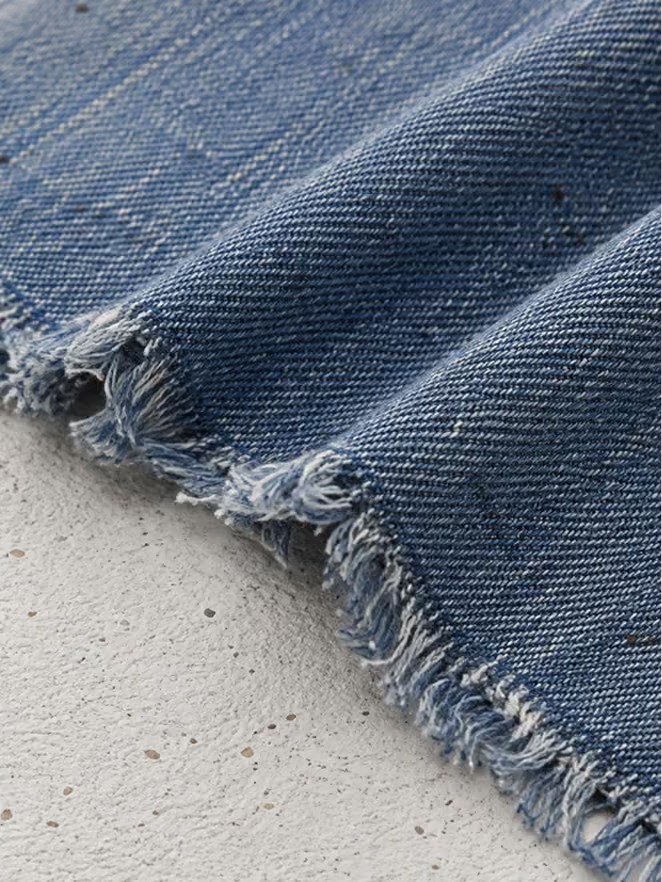
The appearance of recycled denim paper can be quite different from traditional denim fabric. Once the fibers are broken down and formed into paper, the familiar woven pattern disappears. Depending on the fiber blend, the finished sheet may have subtle blue flecks, a muted color, or a textured surface.
Some grades may look closer to conventional specialty paper, while others retain more visible evidence of their textile origin. That variety creates several design possibilities.For a minimalist luxury brand, a pale paper with scattered denim fibers could work with simple black typography. A fashion label with a stronger denim identity might explore a deeper blue tone and a more noticeable texture.
The finish also changes how the paper interacts with printing and decoration. Embossing can add depth without covering the surface, while heavy ink coverage may hide the fibers that give the material its character.
For designers, the most useful starting point is a physical sample. A photograph rarely captures the texture, thickness, and surface variation of specialty paper.
What Are the Benefits of Recycled Denim Packaging?
Gives Discarded Textiles Another Use
One benefit of recycled denim packaging is that it creates a potential use for cotton fibers recovered from textile waste.
Clothing that is unsuitable for resale or reuse may still contain fibers that can be processed into other materials. Incorporating suitable recovered fibers into paper offers another route for using that resource.
This can be particularly interesting for fashion brands exploring ways to make use of discarded textiles.
Creates a Connection Between Fashion and Packaging
Denim is familiar to shoppers. Its color, texture, and association with clothing give designers a recognizable material to work with. Using denim-derived fibers in packaging can help connect a fashion collection with its presentation.
A garment tag made with recovered denim fibers, for example, can reinforce the story of a denim product without requiring a long explanation or elaborate decoration.
Offers Distinctive Design Possibilities
Traditional luxury packaging often relies on specialty paper, coatings, printing, or decorative finishes to create a particular appearance.
Denim-fiber paper introduces another source of surface variation. Its visible fibers and subtle changes in color can become part of the design. Brands may be able to use restrained printing or embossing while allowing the material itself to provide visual interest.
Is Recycled Denim Packaging Recyclable?
Recycled denim packaging made from paper fibers may be suitable for paper recycling, depending on the finished material and the facilities available where it is discarded.
The distinction is between the base paper and the complete packaging product. A denim-fiber paper sleeve without additional treatments may be easier to process than a heavily laminated version. A shopping bag with non-paper handles or attached decorations may require different handling.
Material specifications can help brands establish whether a finished product is accepted in conventional paper recycling streams.
There is also a difference between recycled content and recyclability. Recycled content describes the proportion of recovered material used to make the packaging. Recyclability describes whether the packaging can be collected and processed into new materials after use.
A package can contain recycled fibers without being recyclable in its finished form. Brands should communicate these properties separately and use verified material information when making environmental claims.
How Can Luxury Brands Choose Recycled Denim Packaging?
A brand exploring recycled denim packaging can begin with a small-format product before introducing the material across an entire packaging collection.
Here are five useful steps.
- Start with the packaging format. A garment tag or decorative sleeve may offer a simpler starting point than a large shopping bag that needs to carry significant weight.
- Review the material composition. Ask for the percentage of recovered denim fibers and details of the other fibers used in the paper.
- Compare physical samples. Examine the paper's color, texture, thickness, and surface finish. Test how logos and printed details appear on the material.
- Develop a packaging prototype. Create a sample using the intended structure and decoration. For a gift-box sleeve, this includes checking how the material folds around the box and whether the edges remain clean.
- Review production and disposal requirements. Confirm material availability, manufacturing quantities, packaging performance, and the appropriate end-of-life instructions for the markets where the product will be sold.
The process should also consider whether the packaging component serves a useful purpose. For example, adding a denim-fiber sleeve to an existing gift box may improve its presentation, but it also introduces another component. If the original box already provides the intended experience, replacing its existing wrap may be preferable to adding an extra layer.
At IDP Direct, we follow this thinking through our Design for Absence approach. We look for ways to remove unnecessary components and reduce material use while preserving the quality and presentation expected from luxury packaging.
Exploring Recycled Denim Packaging With IDP Direct
At IDP Direct, we specialize in custom luxury packaging, from paper shopping bags and rigid gift boxes to reusable textile packaging. Our work brings together material selection, structural design, and manufacturing.
We also explore alternative materials, including recycled fashion fibers and denim pulp, as part of our approach to packaging development. For brands interested in denim-derived paper, a practical starting point is to choose a specific packaging format and assess suitable materials.
A fashion label, for example, could begin by comparing a conventional recycled paper garment tag with a denim-fiber alternative. The samples would help the team assess surface texture, printing, embossing, and how the finished tag complements the clothing collection.
From there, the same material could be evaluated for a gift-box wrap or presentation sleeve. Its suitability for production would need to be established through material specifications, sampling, and testing.
Giving Denim a New Purpose in Luxury Packaging
A denim-fiber garment tag or gift-box wrap can connect a fashion product with its packaging through a shared material. It also offers brands another way to explore recovered textile fibers without redesigning an entire packaging collection.
At IDP Direct, we help luxury brands develop packaging that balances material choices, structural design, and presentation. If you're considering recycled textile fibers or exploring new packaging materials, contact our team to discuss your project.
Frequently Asked Questions
Is Recycled Denim Packaging Made Entirely From Old Jeans?
Recycled denim packaging paper is not necessarily made entirely from old jeans. Recovered denim fibers can be blended with other cellulose fibers to achieve the properties needed for papermaking and packaging production. The composition varies according to the material.
Can Recycled Denim Paper Be Used for Luxury Gift Boxes?
Yes, recycled denim paper can be explored for luxury gift-box wraps, sleeves, and folding cartons. The material's thickness, folding performance, and strength determine how it can be used. For rigid boxes, denim-fiber paper may serve as a decorative outer layer over a supporting board.
Is Recycled Denim Packaging Biodegradable?
Recycled denim packaging made entirely from cellulose-based fibers may be biodegradable under suitable conditions. However, a finished product's behavior also reflects its coatings, adhesives, and other components. Biodegradability claims should be supported by evidence for the finished packaging.
Does Recycled Denim Packaging Always Look Blue?
No, recycled denim packaging does not always have a blue appearance. Its color can change according to the recovered fibers, the paper blend, and the manufacturing process. Some papers may contain visible blue flecks, while others have a more even appearance.
Explore our factory locations, review our certifications, or talk to our team about what factory-direct manufacturing means for your brand.