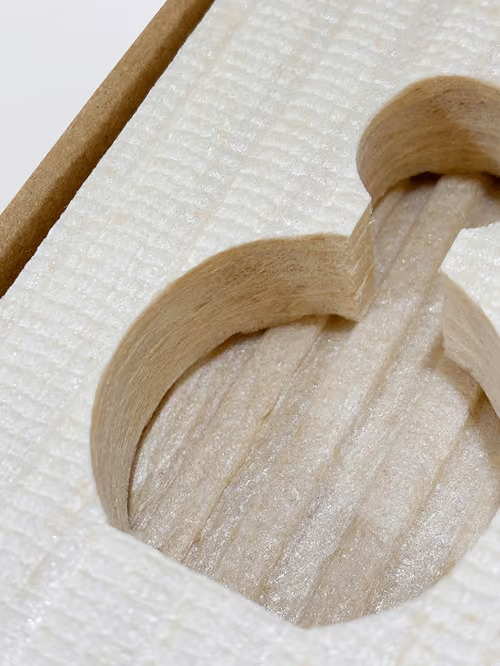
Made from cellulose fibers, sometimes with added starch, paper foam packaging has a light, airy texture. It helps cushion fragile items and stops them from shifting inside the box. Fragrance bottles, gift sets, and online orders are some of the products it could help protect.
It belongs to a growing group of sustainable packaging materials being explored as alternatives to conventional plastic foams. But "paper foam" covers different recipes and production methods, so two products bearing that description may behave quite differently. This guide explains how it works, where it could be used, and what packaging teams should check before specifying it.
How Is Paper Foam Packaging Made?
The starting point is usually plant-derived fibers, but the way manufacturers create the foam varies. Two approaches are especially relevant to protective packaging.
Foamed Cellulose Fiber
To make this type of foam, manufacturers mix cellulose fibers with a liquid filled with tiny air bubbles. Once the mixture is formed into the desired shape and dried, those bubbles leave small pockets throughout the material.
The finished foam can be made into lightweight sheets or pads that give slightly when pressed. Researchers are looking at how different fibers, foam densities, and binders change its strength, cushioning ability, and response to moisture.
Molded Starch-and-Fiber Foam
Another approach uses starch, fibers, and water to create a mixture that is placed or injected into a heated mold. Heat expands and sets the material into a defined three-dimensional shape, such as a tray with a recess for a bottle.
This approach can create more detailed fitted components than a simple flat pad. It also differs from conventional molded pulp, which is generally formed from a watery fiber slurry and pressed or dried into shape.
How Does Paper Foam Protect Products?
The cushioning comes from the material's porous structure. When a package is dropped or squeezed, the foam can deform and absorb some of the impact before it reaches the product. How much protection it offers is influenced by thickness, density, shape, and how the product rests against it.
Consider a glass fragrance bottle in a rigid presentation box. A protective insert might cradle the base and shoulders of the bottle, leaving enough clearance to prevent it from striking the outer walls. A simple pad may suit a flat cosmetic compact, while a shaped tray may be better for a gift set with several items.
Protection is more than softness. A well-designed insert also limits movement, supports delicate corners, and makes it easy for customers to remove the product without pulling on a fragile cap or decoration.
Where Could Paper Foam Packaging Be Used?
Fragrance and Beauty Gift Sets
A fitted paper foam insert could hold a perfume bottle, lotion, or cosmetic jar in a defined position inside a rigid gift box. For a multi-piece skincare collection, recesses of different depths could keep each item level and make the set look organized when opened.
The surface matters as much as the fit in luxury packaging. Brands would need to evaluate color consistency, edge quality, dusting, and whether the material leaves marks on glossy or decorated containers.
Luxury Accessories and Collectible Packaging
For a boxed watch accessory, small ceramic object, or limited-edition keepsake, paper foam could be used as a removable cradle that helps prevent movement. An exposed insert might also become part of the presentation, particularly where a clean, understated interior is preferred.
That use would call for careful prototyping around the object's shape and finish. A rough or poorly fitted insert could scuff a polished surface even if it absorbs impact well.
E-Commerce and Shipping Boxes
Paper foam pads or fitted pieces could offer cushioning between a product and the walls of a corrugated mailer. For example, a beauty brand shipping a boxed glass serum might explore corner pieces rather than loose plastic fill.
Shipping creates a different challenge from a product sitting on a retail shelf. The completed pack must survive handling, vibration, compression, and drops on the routes it will actually travel.
What Are the Benefits of Paper Foam Packaging?
Paper foam offers cushioning without adding much bulk. It can be made into flat sheets, protective pads, or shaped inserts that support fragile parts of a product. This gives packaging designers more control over where cushioning is placed inside a box.
For brands looking to use less plastic, paper foam is another option worth exploring. Certain formulations also come in different colors and finishes, making them suitable for packaging where the inside of the box matters as much as the outside.
A shaped insert can also make packing easier. Rather than wrapping each item separately, a brand could use one piece with fitted spaces for several products. For example, a skincare gift box could hold multiple jars and bottles in a single tray.
Paper foam isn't always the cheapest or strongest choice, however. A molded pulp tray or folded paperboard insert might do the same job with less material. Comparing finished prototypes helps brands see which design works best for their products.
Paper Foam vs. Molded Pulp, Corrugated Board, and Plastic Foam
These materials can all protect products, but they do different jobs. The table is a starting point for selecting prototypes, not a performance ranking.
A molded-pulp tray may be suitable when the main job is to keep a bottle upright. Corrugated dividers can separate several boxed products in one shipper, while a foam-like material may be worth testing where impact cushioning is the bigger concern.
Is Paper Foam Packaging Sustainable?
Paper foam can use renewable, fiber-based ingredients, and some commercial formulations are designed for recycling in paper streams. Others are marketed for composting under specified conditions. Neither claim should be applied to every paper foam product simply because it contains cellulose or starch.
Binders, coatings, dyes, and other ingredients can change what happens after use. A finished insert also needs to be accepted by the collection and processing systems in the markets where customers will dispose of it. For a product sold across several countries, a single universal recycling instruction may be misleading.
There is also the question of how much material is used. A thick paper-based insert is not necessarily a better environmental choice than a smaller paperboard structure that already meets the protection requirement. Material sourcing, production, transport volume, product damage, and end-of-life options all belong in the comparison.
How Should Brands Evaluate Paper Foam Packaging?
Start with the actual product and its packaging journey. A fragrance bottle sold in-store needs a different level of protection from the same bottle shipped individually to a customer's home. Record its weight, vulnerable areas, box dimensions, handling conditions, and how it should look when opened.
Next, compare a paper foam concept with alternatives that solve the same problem. Request physical samples, confirm production tooling and minimum quantities, and test the complete pack with its real contents. The International Safe Transit Association publishes testing procedures, including ISTA 3A for individual parcel shipments, that can help teams choose relevant transit tests.
At IDP Direct, we also question whether an insert is needed before replacing it with a new material. Our Design for Absence approach starts by removing unnecessary components and right-sizing the structure. That can lead to a simpler answer than substituting one type of foam for another.
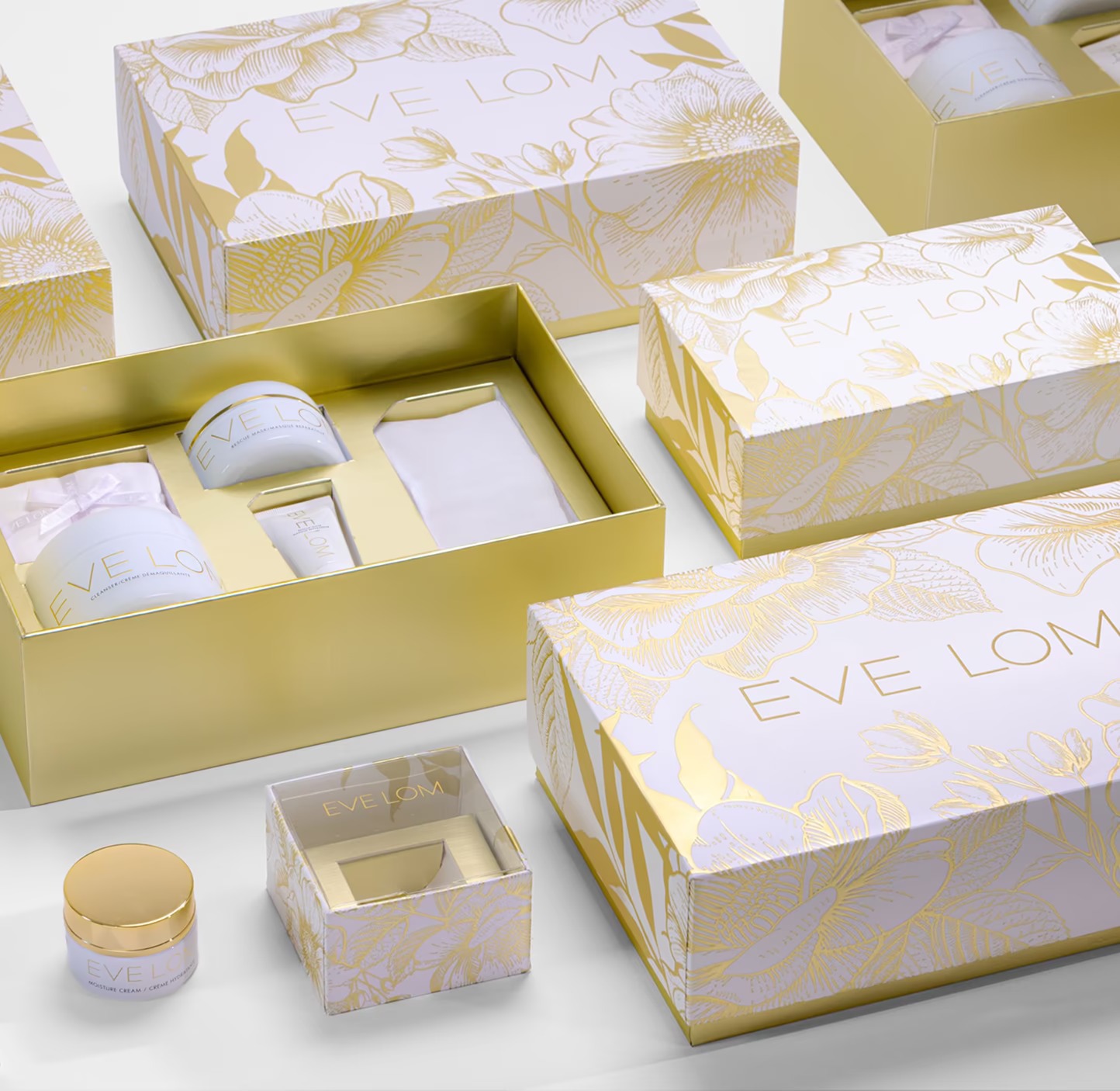
Our Eve Lom packaging project offers a related example. We replaced thermoformed plastic trays with paperboard inserts that shipped flat and held the skincare products in place inside holiday gift boxes. Those inserts were not made from paper foam, but the project illustrates a useful design question: can a different structure deliver the needed protection with fewer components?
Exploring the Right Protective Packaging
Paper foam is worth exploring when a product needs cushioning and a packaging team wants to assess alternatives to conventional plastic inserts. For a premium gift set, start by comparing a shaped foam sample with a paperboard or molded-fiber design that holds the same products.
At IDP Direct, we work with brands on packaging structure, materials, prototyping, and manufacturing. If you're reviewing protective inserts or developing a new luxury packaging program, contact our team to discuss the options worth testing.
Frequently Asked Questions
Is Paper Foam Packaging the Same as Molded Pulp?
Paper foam packaging isn't the same as molded pulp. Paper foam has a soft, airy structure that cushions products against knocks. Molded pulp is made by forming wet paper fibers into firmer shapes, such as the trays used to hold perfume bottles.
Can Paper Foam Packaging Be Recycled?
Some paper foam packaging is designed to be recycled with paper, but acceptance depends on its finished formulation and local recycling rules. Packaging teams should obtain recyclability evidence for the specific material and the countries where it will be sold.
Is Paper Foam Packaging Biodegradable?
Some paper foam packaging formulations are biodegradable or certified for particular composting conditions. A claim about one product cannot be assumed to apply to other versions containing different binders, coatings, or additives.
Can Paper Foam Packaging Protect Glass Bottles?
Yes, paper foam can be used to cushion glass bottles during shipping. For fragrance packaging, a fitted insert could hold the bottle in place and reduce knocks against the box. Try it with the finished bottle first, including its cap and any printed details, to see how well it holds up.
Explore our factory locations, review our certifications, or talk to our team about what factory-direct manufacturing means for your brand.